GLENFIDDICH
TIME RE: IMAGINED
LOUIS VUITTON
SAVOIRE FAIRE
NETFLIX
THE CROWN PREMIERE
MICHAEL KORS
JET SET SANYA
MICHAEL KORS
JET SET SANYA
MOËT & CHANDON
NBA X JUST DON
MOËT & CHANDON
NYC HOLIDAY
ROLLS-ROYCE
GOODWOOD FESTIVAL OF SPEED
THE SERPENTINE
THE SERPENTINE SUMMER PARTY
In the premium events industry, the tension between a bold creative vision and strict cost efficiency can drive agencies crazy. The winning strategy sounds deceptively simple: Deliver high-impact, innovative storytelling while minimising unnecessary spend. But for agencies standing at the intersection of imagination and invoice, that call is rarely straightforward.
This is not a theoretical debate. It plays out in pitch rooms, budget meetings, and late-night production calls. It surfaces when the creative director insists the set must rotate, the strategist argues the narrative needs a live performance element, and the finance lead quietly recalculates the margin for the third time…
Most agencies operate in this fragile creative-financial space. They must produce something that feels culturally significant without assuming infinite resources. And increasingly, they must do it under the scrutiny of procurement teams and performance dashboards.
When big ideas meet real budgets
The early stages of any premium event creation are intoxicating and the language is ambitious: “Immersive,” “Transformative,” “Multi-sensory.” Then the numbers arrive, and suddenly, every creative flourish has a cost implication. This is where agencies face their defining test - do they protect the idea at all costs? Or do they adapt the idea to protect the margin? The agencies that endure and grow understand a counterintuitive truth: cost discipline does not diminish creativity - it sharpens it.
In the premium event space, there is a persistent belief that scale equals impact. Larger guest lists, more elaborate builds, headline entertainment. But audiences today are highly attuned to authenticity. They have experienced enough overproduced environments to sense when spectacle replaces substance. The lesson? Impact is not a function of spend - It is a function of clarity. When a concept is razor-sharp, every element earns its place. When it is vague, budgets expand to compensate for the lack of narrative focus.
The end of generic mass luxury communications.
For agencies, the tension is structural. Creative teams are incentivised to push boundaries - awards, press coverage, and portfolio strength rewards creative boldness. Meanwhile, commercial teams must protect profitability in an environment of rising costs. Add to this the growing expectation for measurable ROI, data capture, content generation, lead acquisition, and social amplification - all layered into the same overall budget. Miss the balance, and consequences surface quickly. Over-invest creatively, and the agency absorbs the financial strain. Over-index on cost efficiency, and the work becomes indistinguishable - eroding long-term brand equity and client love.

Pandora x Netflix Bridgeton | INCA Productions
So where does the sweet spot lie? It begins with alignment, not aesthetics. The strongest premium experiences start with a disciplined question: What must this audience feel, understand, or do differently as a result of this event? That clarity becomes the filter for every cost decision. If a creative-feature does not amplify the core brand objective, it is a candidate for removal - no matter how visually impressive.
A 2023 study on resource constraints and innovation, published in the Journal of Marketing Research, found that “Budgetary limitations can actually enhance creativity by forcing teams to engage in more divergent problem-solving.”
This approach reframes cost conversations - Instead of asking, “Can we afford this?” agencies ask, “Does this deepen the brand narrative?”
Often, the answer reveals surprising efficiencies. A thoughtfully scripted moment can replace an expensive installation. Lighting can create immersion without structural complexity. A carefully curated guest list can generate more cultural currency than a sprawling crowd.
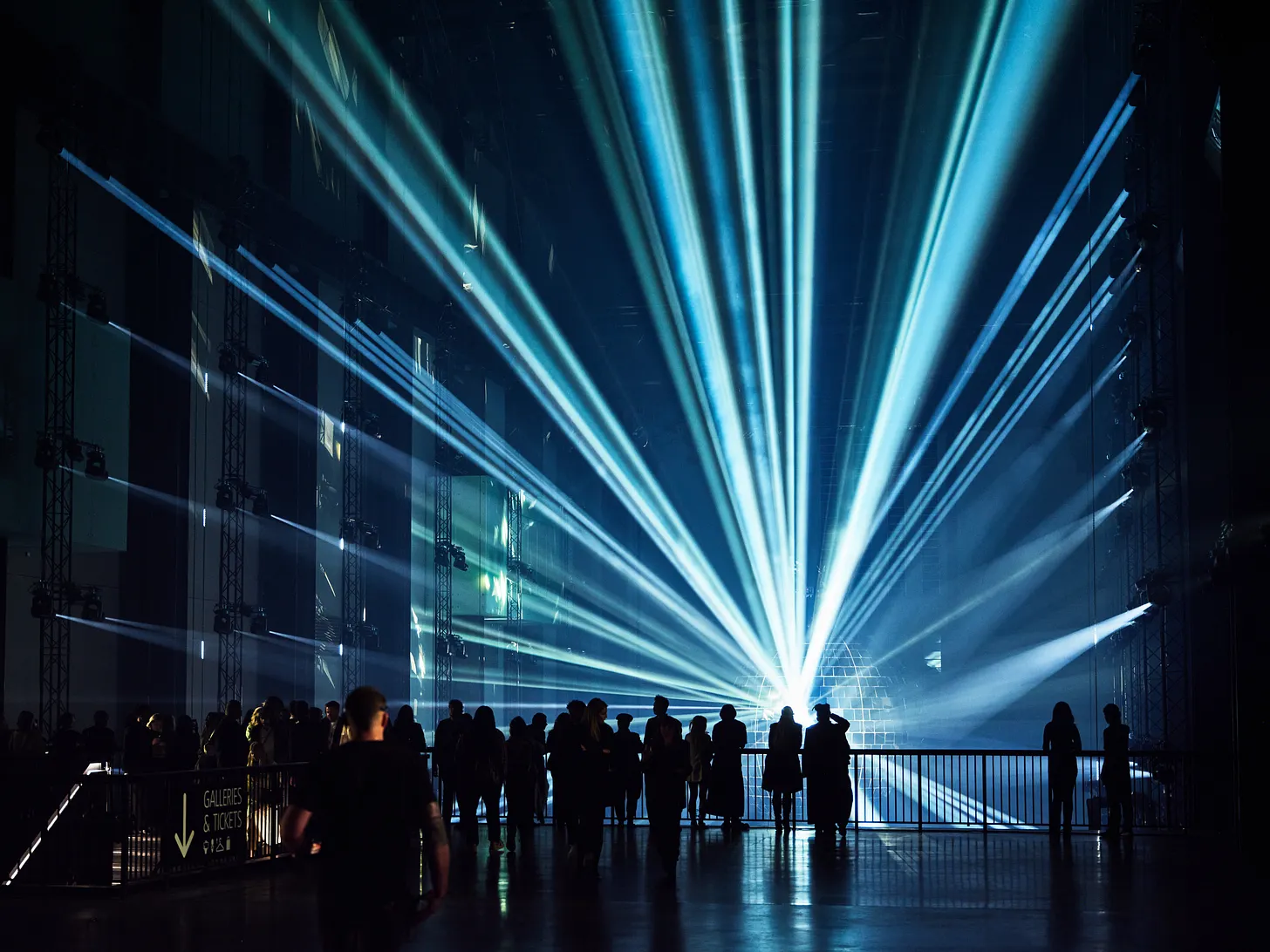
Gucci | Bureau Betak x INCA Productions
Creativity within constraint
Ironically, constraint often unlocks the most original thinking. When budgets are finite, teams are forced to prioritise what truly matters. This pressure can produce more distinctive work than unlimited resources ever could.
Research published in the Harvard Business Review supports the thesis that budget pressure can refine rather than dilute creative thinking, “Constraints are not the enemy of innovation. They are often its catalyst. When resources are limited, teams are forced to rethink assumptions and focus on what actually creates value.”
- Harvard Business Review, “How Constraints Drive Creativity”
The future belongs to agencies that treat budget not as a barrier, but as a creative spring-board. Because ultimately, the success of a premium event is not measured in square meters of staging or number of screens. It is measured in memory, perception, and cultural imprint.
The late, great branding expert and founder of Wolff Olins and Saffron Brand Consultants, Wally Olins, once said “The best identities are simple, but they are never simplistic.” The same can be said for premium brand events. The tension between creativity and cost will never disappear, and nor should it. That friction is what keeps the industry dynamic. The goal is not to eliminate the tension but to master it.
And in that mastery lies the true sweet spot.


