GLENFIDDICH
TIME RE: IMAGINED
LOUIS VUITTON
SAVOIRE FAIRE
NETFLIX
THE CROWN PREMIERE
MICHAEL KORS
JET SET SANYA
MICHAEL KORS
JET SET SANYA
MOËT & CHANDON
NBA X JUST DON
MOËT & CHANDON
NYC HOLIDAY
ROLLS-ROYCE
GOODWOOD FESTIVAL OF SPEED
THE SERPENTINE
THE SERPENTINE SUMMER PARTY
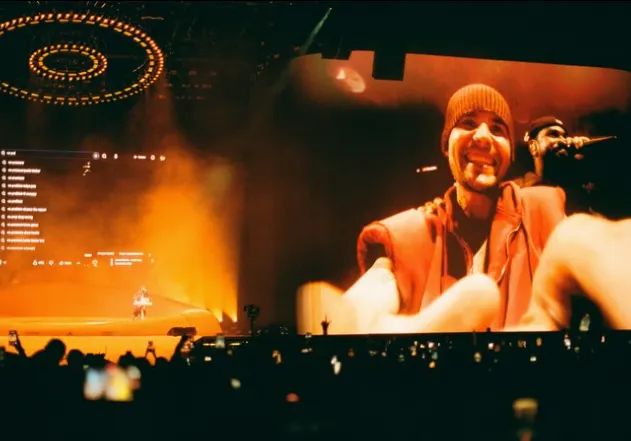
In an era where festival performances often collapse under the weight of their own production ambition, Justin Bieber’s recent Coachella appearance offered something rarer - restraint as a form of aesthetic dominance. It wasn’t just a festival set, it was a recalibration of how mega-brands can author cultural moments without surrendering to excess.
For over a decade, the trajectory of large-scale live production has been predictable - bigger screens, louder visuals, more surprise guests - more everything. The assumption has been simple - scale equals impact.
But Bieber’s performance quietly dismantled that logic. Instead of overwhelming the audience, it focused them. Instead of expanding outward, it pulled inward. The result was not a reduction in spectacle, but a redefinition of it.
This is where the performance becomes instructive for brand and creative leaders. Bieber didn’t just perform within a brand system - he elevated the system itself into the main event. Every detail felt governed by an invisible but unmistakable discipline. There were no chaotic pivots, no indulgent detours. The show moved with intention, each moment reinforcing a singular creative thesis: precision is power.
Intimate brand storytelling
What made this particularly compelling was how it transcended Bieber’s own identity as an artist. The set didn’t scream for attention; it earned it. By resisting the urge to constantly escalate, it created space - space for the audience to project, to feel, and to engage on their own terms. In doing so, the performance expanded beyond personal branding and became something closer to brand storytelling. It was so powerful it shaped the emotional architecture of the festival itself.
This is the emerging language of premium production: control without rigidity, minimalism without emptiness. What you remove becomes as important as what you include. Bieber’s team understood this at a granular level - transitions were tight, almost surgical, visual elements were purposeful, never ornamental. Even moments of silence or stillness were deployed as active tools, not passive gaps.
There’s a deeper strategic lesson here. In a hyper-saturated cultural landscape, attention is no longer captured through escalation - it’s captured through clarity. Audiences are increasingly fluent in spectacle; they can decode it instantly. What they respond to now is authorship. A point of view. A sense that what they’re witnessing has been considered, not just assembled.
Music & culture journalist
Mimi the Music Blogger makes an interesting point about a new era of event authorship ;
“What we were really watching was a collision between two definitions of what a concert is supposed to be. One is spectacle, production value, choreography, scale… The other is authorship, the artist controlling the frame entirely, even when the frame is quiet, intimate, or deliberately messy - Justin chose authorship.”
For premium production companies and brand activation leaders, this signals a critical evolution. The future isn’t about outspending or out-scaling competitors. It’s about out-editing them. It’s about crafting experiences where every element feels inevitable rather than excessive. Where coherence replaces chaos. Where instigated divisiveness drives cultural moments.
Culture conservationist
Commpress embraces the new cultural spark of the diverse performance
“Was it the most intimate thing a superstar has ever done on a festival main stage, or a colossal waste of everyone’s money?... We’re of the firm belief that anything that moves you is art and the best art should be divisive; this sits firmly in that category.”
Perhaps most importantly, Bieber’s performance reframed what it means to “own” a cultural moment. Ownership didn’t come from dominating the conversation with noise. It came from shaping the conditions under which the audience experienced the festival itself. Subtle, but total.
In that sense, the set wasn’t just a performance - It was a blueprint. A case study in how restraint, when executed with absolute conviction can elevate not only a brand, but the entire ecosystem it inhabits.The spectacle, it turns out, doesn’t need to be louder. It needs to be smarter.